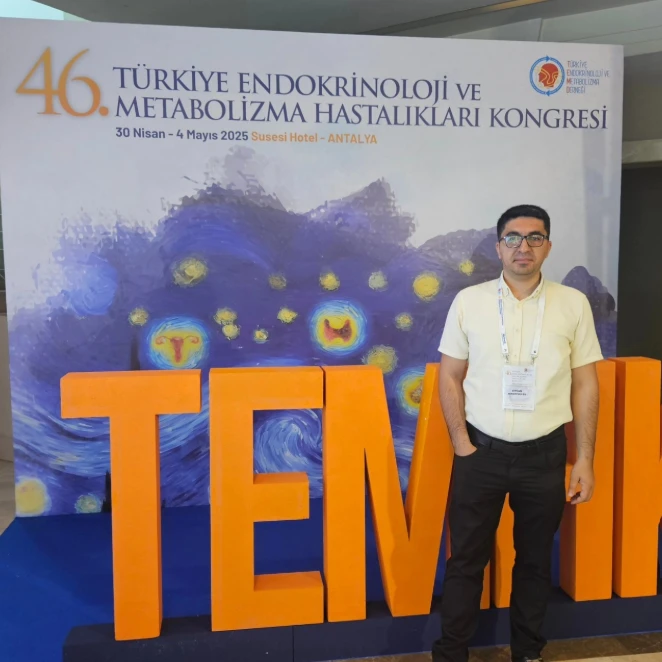
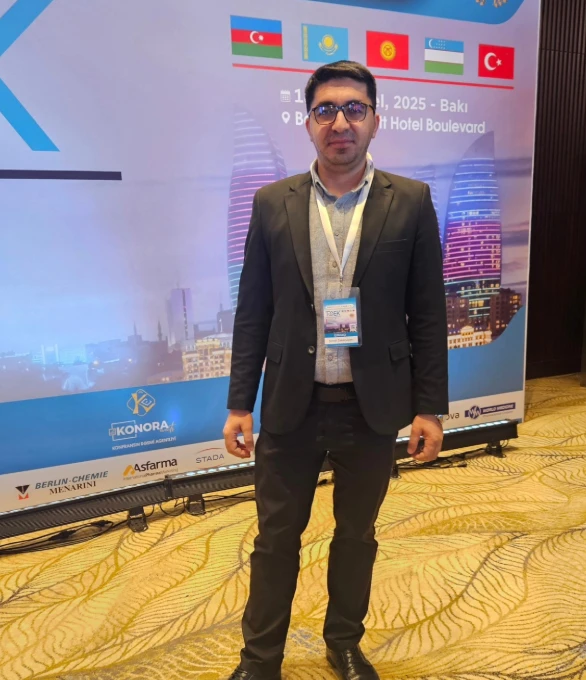
About the doctor
Dr. Shirvan Zekeriyeyev — endocrinologist
Short answer
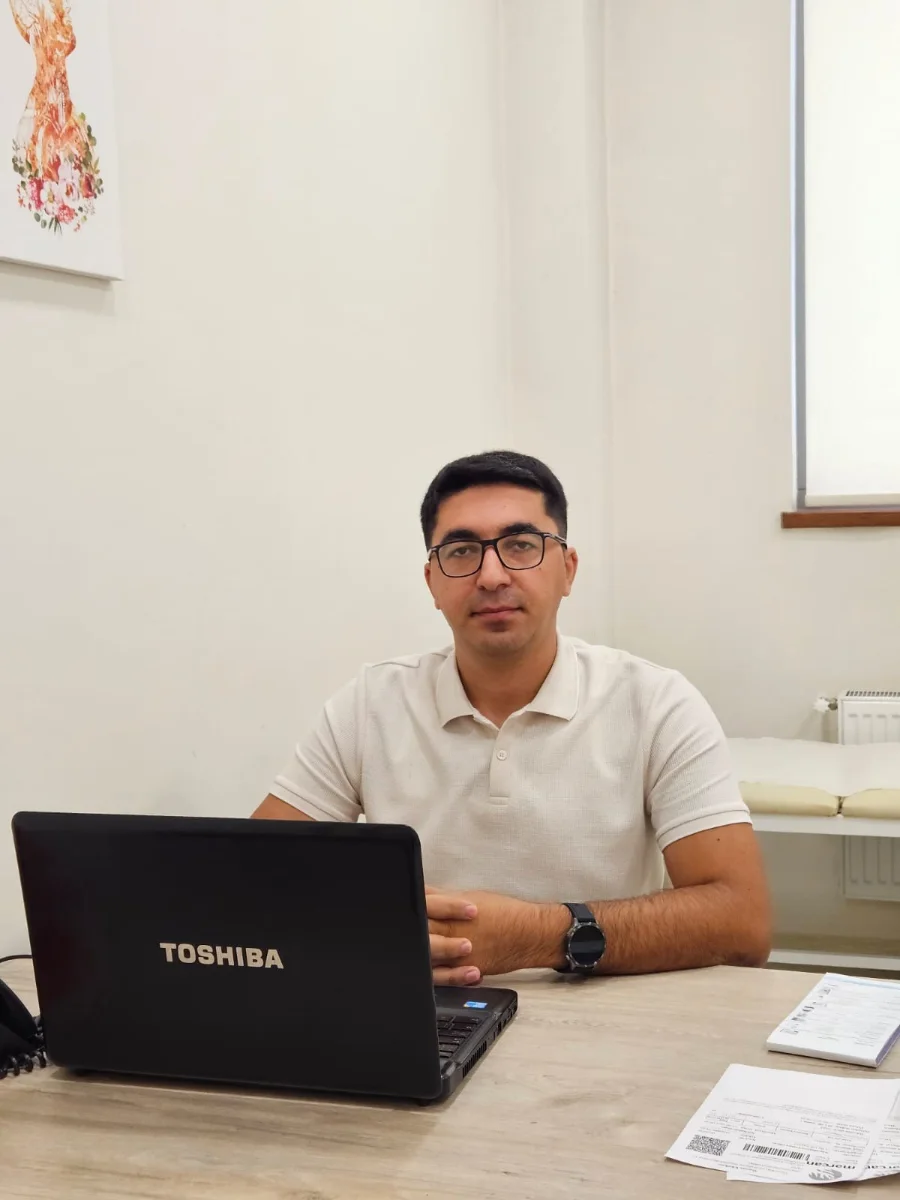
Dr. Shirvan Zekeriyeyev is an endocrinologist who diagnoses and treats endocrine and metabolic diseases. Dr. Zekeriyeyev graduated from Azerbaijan Medical University (AMU, 2012–2018) and completed a residency in endocrine diseases at the AMU Teaching Therapeutic Clinic (2018–2022). In Türkiye, the doctor attended advanced training courses in endocrinology, thyroid ultrasound and nodule biopsy. Currently, the doctor sees patients in Baku at Caspian International Hospital and in Gabala at Sağlam Həyat Medical Center.
At a glance
- Name
- Dr. Shirvan Zekeriyeyev
- Other spellings
- Şirvan Zəkəriyəyev · Şirvan Zəkəriyyəyev · Shirvan Zakariyayev
- Specialty
- endocrinologist. Main areas: thyroid disorders, diabetes, overweight and insulin resistance, hormonal disorders, growth and puberty problems in children, bone and mineral metabolism (osteoporosis, parathyroid, vitamin D)
- Education
- Azerbaijan Medical University (AMU), 2012–2018
- Residency
- in endocrine diseases, AMU Teaching Therapeutic Clinic, 2018–2022
- Further training (Türkiye)
- endocrinology course (2019–2021); Bağcılar Training and Research Hospital — course in thyroid ultrasound and nodule biopsy (2020)
- Current appointments
- Baku — Caspian International Hospital
- Gabala — Sağlam Həyat Medical Center
- Previous workplaces
- Baku — Mərcan Medicare Clinic (20 Yanvar); Gubadli Central District Hospital (about 3 years, until September 22, 2025); Zagatala — Labstyle Hospital; Balakan — Elmas Clinic
- Examinations and procedures the doctor performs personally
- (according to the doctor's own posts and videos):
- endocrinological examination (including thyroid palpation)
- thyroid and neck ultrasound
- ultrasound-guided fine-needle aspiration biopsy (FNA) of thyroid nodules
- drainage, sclerotherapy and ablation of thyroid cysts
- Appointments
- by prior appointment
- Languages
- Azerbaijani, Russian
What problems the doctor works with
Based on the doctor's own posts, videos and consultation announcements, these are the topics most often seen in daily practice:
- Thyroid gland:
- nodules, cysts, nodular and diffuse goiter
- hypothyroidism (“underactive thyroid”), Hashimoto's thyroiditis
- toxic goiter (Graves' disease), subacute thyroiditis
- thyroid monitoring during pregnancy
- thyroid ultrasound and FNA
- Diabetes and prediabetes:
- choosing medication and insulin treatment
- monitoring with HbA1c
- hypoglycemia
- diabetic neuropathy and diabetic foot (together with other doctors)
- Overweight and metabolism:
- investigating the cause of obesity
- insulin resistance, acanthosis, cholesterol and triglycerides
- weight-loss injections — only when indicated
- Hormonal disorders: PCOS (PMOS), hirsutism, high prolactin, cortisol disorders
- Reproductive endocrinology: hormonal infertility
- Pediatric endocrinology: slow height growth, bone age, early puberty
- Bone and mineral metabolism: osteoporosis, parathyroid diseases, calcium and vitamin D disorders
In an OTX interview, the doctor lists the problems encountered most often in the Ganjabasar (western) region as follows: infertility, short stature in children, goiter and blood sugar problems.
Approach
Without rushing into hormonal treatment, the cause of the symptoms is investigated first. Each patient's diagnosis and treatment approach are assessed individually. The doctor's own words:
- “With thyroid gland diseases, we think a hundred times before we finally prescribe a medication. The reason is this: we try not to prescribe hormonal medication to every patient. Every patient is an individual.”
- “Correct diagnosis lays the foundation for correct treatment.”
- “Remember, your diagnosis will not be the same as your neighbor's. Just as everyone is an individual, treatment must be individual too.”
- “Is complete recovery possible in endocrine-metabolic diseases? Both ‘yes’ and ‘no’ — it depends on the type of disease. In some cases, we speak of recovery alongside lifelong medication, and in others we can stop the medication completely.”
Contact with patients
In an OTX interview, the doctor says that nowadays there are many ways for a patient to reach a doctor: social media, the doctor's website, a phone number, WhatsApp. A patient can write down their initial complaint. If the complaint falls within the endocrinologist's specialty, the doctor invites the patient for a consultation. For example, when a patient says, “Doctor, I feel like I'm choking,” two or three signs show whether this is an endocrine problem (goiter) or not. If the symptom is not linked to an endocrine cause, the doctor tells the patient which specialist to see.
Multidisciplinary work
The doctor's posts clearly show joint work with doctors of other specialties:
- Diabetic foot wound: the surgical part was carried out by a surgeon (Dr. Fariz Abdullayev). The endocrinologist first brought blood sugar under control with insulin, then switched to tablet treatment.
- Diabetic neuropathy: “sometimes examination and treatment by several doctors, especially a neurologist, may be needed.”
- Referred patients:
- an osteoporosis diagnosis in a patient referred by a neurologist;
- severe hypothyroidism and a mass in the neck arising from the thyroid found in patients referred by a cardiologist and an ultrasound doctor.
- Polycystic ovaries (PCOS): “it is best to make a collective decision when diagnosing it.”
Professional connections
The doctor has taken part in scientific events together with well-known specialists in endocrinology in Azerbaijan:
- Dr. Xəyyam Eyvazov, chairman of the Azerbaijan Society of Endocrinologists;
- Prof. Valeh Mirzəzadə, Doctor of Medical Sciences, chairman of the Association of Endocrinology, Diabetology and Therapeutic Guidance of the Republic of Azerbaijan;
- Prof. R.M. Məmmədhəsənov, head of the department.
At a congress, the doctor met Prof. Alptekin Gürsoy from Türkiye; in a post, the doctor calls the professor “our very esteemed teacher.”
At scientific events